Category: crealectics
-
Numérisme et Créalisme: la Dialectique du Siècle à Venir
On the 10th anniversary of this publication Download the article in French:
-

Creation of the Possible (Bergson)
“The artist in executing his work is creating the possible as well as the real…” H. Bergson, “Le possible et le réel,” in La Pensée et le Mouvant. Essais et conférences, Paris, Félix Alcan, 1934, translated by Mabelle L. Andison, “The possible and the real,” in The creative mind, The Philosophical Library, 1946.
-

Creative Meta-Dialectics
Around 2001 I expressed my desire for a book that would be called, in French, Système du Vécu, a System of the Lived Experience. I believe I have the same desire today, expressed under another label: a theory of crealectics. But whose lived experience are we talking about? Mine? If it is a theory, it should refer…
-
Histosophy as Method
Luis de Miranda: “Histosophy as Method”, Talk at Uppsala University, Live and via zoom, 5 November 2020. Datum: 5 november, kl. 13.15–15.00 Plats: Engelska parken – Rausingrummet Arrangör: Institutionen för idé- och lärdomshistoria Kontaktperson: Sven Widmalm Seminarium Higher Seminar Luis de Miranda, Uppsala universitet: “Histosophy as Method: How I Used It and How I Plan to Use It Again Now” Underlag: “Big…
-
A Brief Critique of the Projected European Vision Regarding Artificial Intelligence (HLEG)
I was invited today to participate in the 1st International Workshop on New Foundations for Human-Centered AI, with some members of the “High Level Expert Group in AI” appointed by the European Commission. There was an interesting (virtual and written) discussion about the European HLEG ethics guidelines for Artificial Intelligence. Here are (a bit out…
-
Health and Cogito
“The preservation of health has always been the principal end of my studies.” Descartes to the Duchess of Newcastle (cited in Health, a History, 2019, Oxford Philosophical Concepts, OUP). Therefore there might be a deep connection between health and cogito –think about it.
-
Philosophical Instruments
“His hands were invariably blotted with ink and stained with chemicals, yet he was possessed of extraordinary delicacy of touch, as I frequently had occasion to observe when I watched him manipulating his fragile philosophical instruments.” Arthur Conan Doyle, A Study In Scarlet (Sherlock Holmes).
-
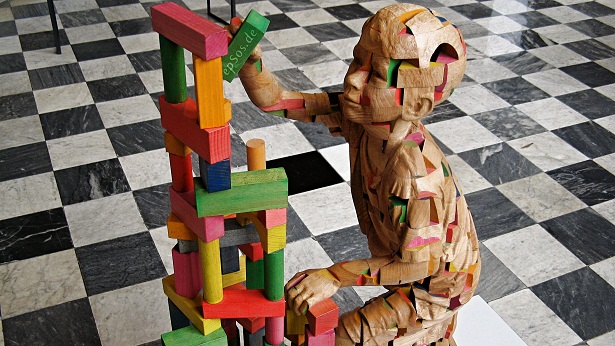
Embracing or Fearing Possibility? From Plotinus to Nietzsche
In his book on Plotinus (1993), Pierre Hadot says about the three first centuries of the Christian era that “this age was disgusted with the body” (p. 23). He quotes Porphyry: “Plotinus resembled someone who was ashamed of being in a body.” But in a footnote Hadot adds: “I am now much less sure about…
-
Nietzsche’s Medical Philosopher
I am still waiting for a philosophical physician, in the exceptional sense of the word—one who has to pursue the problem of the total health of a people, time, race or of humanity—to master the courage to push my suspicion to its limits and to risk the proposition: what was at stake in all philosophizing…
 CREALECTICS